
The Dad's Guide to Surviving a Theme Park Trip
Big parks mean big money, long lines, and tired kids. Here's how to actually enjoy the day instead of just enduring it.
We took the kids to a major theme park a couple summers ago. I did minimal planning, figured we’d wing it. By noon, my youngest was melting down in the shade of a trash can, my oldest was furious that the ride she’d been talking about for six months had a 90-minute wait, and I’d already spent $47 on water and churros. We left by 2pm.
Second trip, I came in prepared. Same park, same kids, better execution. We stayed until the fireworks. That’s the difference between a vacation story and a therapy topic.
Here’s what I learned.
Do the Research Before You Buy the Tickets
Theme park tickets are not cheap and are not interchangeable. Disney World single-day tickets regularly exceed $130 per person depending on the date — and that’s before parking, food, or add-on features like Lightning Lane. Universal Orlando is in the same range. Prices vary by date, with peak summer weekends costing significantly more than a random Tuesday in September.
Before you spend anything, answer these questions:
What are your kids’ height restrictions? The internet will tell you. Look up the specific rides they’re most excited about. There’s nothing worse than watching a six-year-old get turned away from the ride she’s been talking about since Christmas.
How many days do you actually need? Most major parks are multi-day experiences. Trying to see everything in one marathon day will grind your family into dust. If you can swing two days, do it — the second day is dramatically more relaxed because you’ve already gotten your bearings.
Is off-peak an option? Weekday visits in September, October, or January see dramatically shorter wait times — some parks report average waits dropping by 50–60% compared to peak summer. If you can take the kids out of school for a day or shift your vacation by a few weeks, it’s worth it.
Buy tickets in advance online. Parks raise prices frequently and some date-based tickets are genuinely cheaper weeks out than at the gate.
Pack Like a Dad, Not Like a Tourist
You’ll see people walking into theme parks with tiny purses or just a phone in their pocket. Those people will be sunburned, dehydrated, and paying $6 for a bottle of water by 11am.
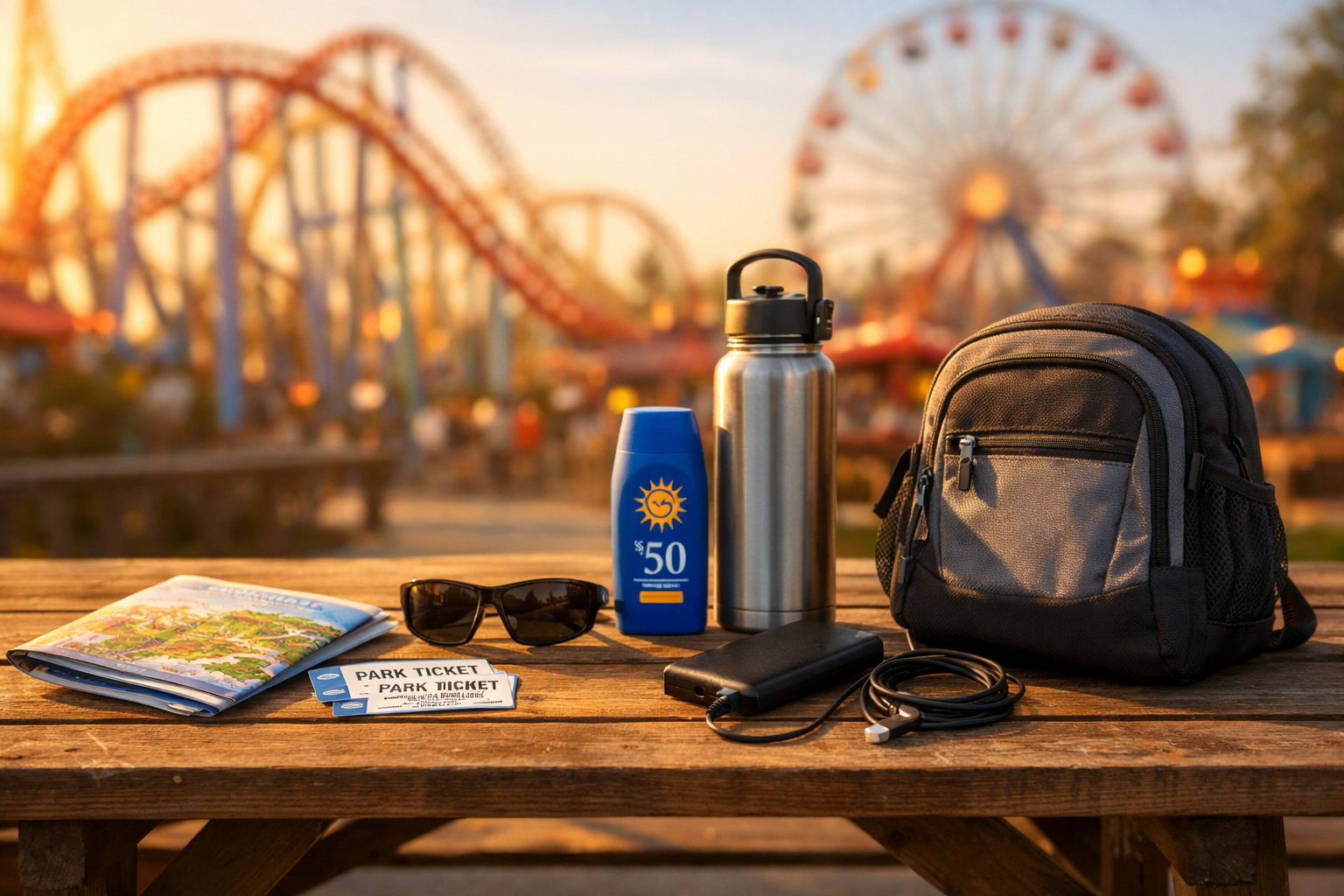
Bring a real backpack. Not huge — a 20–25L daypack is right. What goes in it:
- Refillable water bottles, one per person. Most parks have bottle refill stations. This alone saves $20–$40 a day.
- Sunscreen. Apply before you leave the hotel and bring the bottle. Reapply every two hours. If you’ve got fair-skinned kids, don’t skip this — a sunburn on day one ruins day two.
- Snacks. Granola bars, trail mix, fruit pouches, whatever your kids will actually eat. Hungry kids get mean fast and park food is expensive. Snacks are not a replacement for meals but they hold the line between comfortable and catastrophic.
- A portable phone charger. You will be using the park app constantly for wait times, mobile food ordering, and maps. Your battery will not survive the day on its own.
- Light ponchos. If you’re going to Florida or anywhere that gets afternoon thunderstorms, these weigh nothing and save the whole afternoon.
- A change of clothes for the little ones. Water rides exist. Enough said.
Check the park’s prohibited items list before you pack. Most parks ban glass containers, hard-sided coolers, and selfie sticks.
Own the Morning
The single highest-leverage move you can make at any major theme park: arrive before the gates open.
Resort guests often get 30–60 minutes of early entry. Even if you’re not staying on-site, being in line when the gates open means you’re walking onto the most popular rides with 15-minute waits while everyone else is still finding parking. By 11am, those same rides might be 75 minutes.
Make a loose priority list the night before. Pick the two or three things that matter most to your kids and hit those first. After that, use the park app to make decisions based on live wait times rather than a rigid itinerary.
A counterintuitive trick: the best time to ride popular attractions is during parades and evening shows. Half the park stops moving to watch. The other half is finally short.
Feed Them Before They Break
Food is logistics. Hungry kids don’t complain — they collapse. And theme park food is expensive, slow, and often not what your picky eater wants.
Most parks now offer mobile ordering through their app. Use it. You pre-select your food, pick a time window, and skip the line at the counter. The food comes out faster and you’re not standing in a 20-minute queue at peak lunch hour.
For meals, eat early or eat late. The 11:30am–1:30pm window is when every family in the park decides they’re hungry at the same time. Eat at 10:30 or wait until 2. The lines are shorter and you’ll feel better for the back half of the day.
Keep snacks flowing between meals. The goal is that nobody gets to the point of “I’m starving” — you want steady fuel, not boom-and-bust.
Have a Meltdown Plan Before You Need One
Every kid has a breaking point. Overstimulation, heat, hunger, tired legs, disappointment about a long line — something will tip them over. You need a plan before it happens because by the time it’s happening, you’re not thinking clearly either.
Pick a meeting spot at the start of the day — a landmark that’s easy to find and remember. In case anyone gets separated, everyone knows where to go.
Build in intentional breaks. Find a shaded spot, sit down, eat something, let the energy reset. A 20-minute break mid-afternoon saves the whole evening. The parks that go badly are usually the ones where everyone pushed through exhaustion chasing one more ride.
When a meltdown starts, address the root cause: is someone hungry? Tired? Overstimulated? Move toward a solution instead of fighting the mood. A quiet bench and a snack fixes most of it.
And let go of the plan. The day you scripted in your head three months ago is not the day you’re going to have. Flexibility is the difference between frustration and a good story.
The Budget Reality
A family of four at a major theme park will spend $500–$900 in a single day once you factor in tickets, parking, food, and whatever your kids guilt you into buying at the gift shop. That’s just the reality.
Ways to control it:
- Pack snacks and water (saves $30–$50 easily)
- Eat one meal inside the park, get the second off-site or from what you packed
- Set a souvenir budget per kid before you walk in — they each get $20 and that’s it. They’ll make very intentional choices.
- Skip the upsells at the gate (photo packages, add-on experiences) unless you’ve researched them in advance and decided they’re worth it
The experience itself is the point. You don’t need every extra.
The parents who hate theme parks are usually the ones who went in under-prepared and over-expected. The parents who love them did the work ahead of time. You’ve got this.

Written by
Chris Bysocki
Dad of two (a 6-year-old daughter and a 3-year-old son), homeowner, and guy who learns most things the hard way. Writing about parenting, tools, yard work, and gear from a neighborhood in the real world.
More in this category
Ask Chris
Got a question about this topic — or anything dad-related? Send it over. I read every one.