
How to Hang Anything on Any Wall
Drywall, plaster, brick, tile, studs, no studs. Here's the decision tree every dad needs before he puts a hole in something he'll regret.
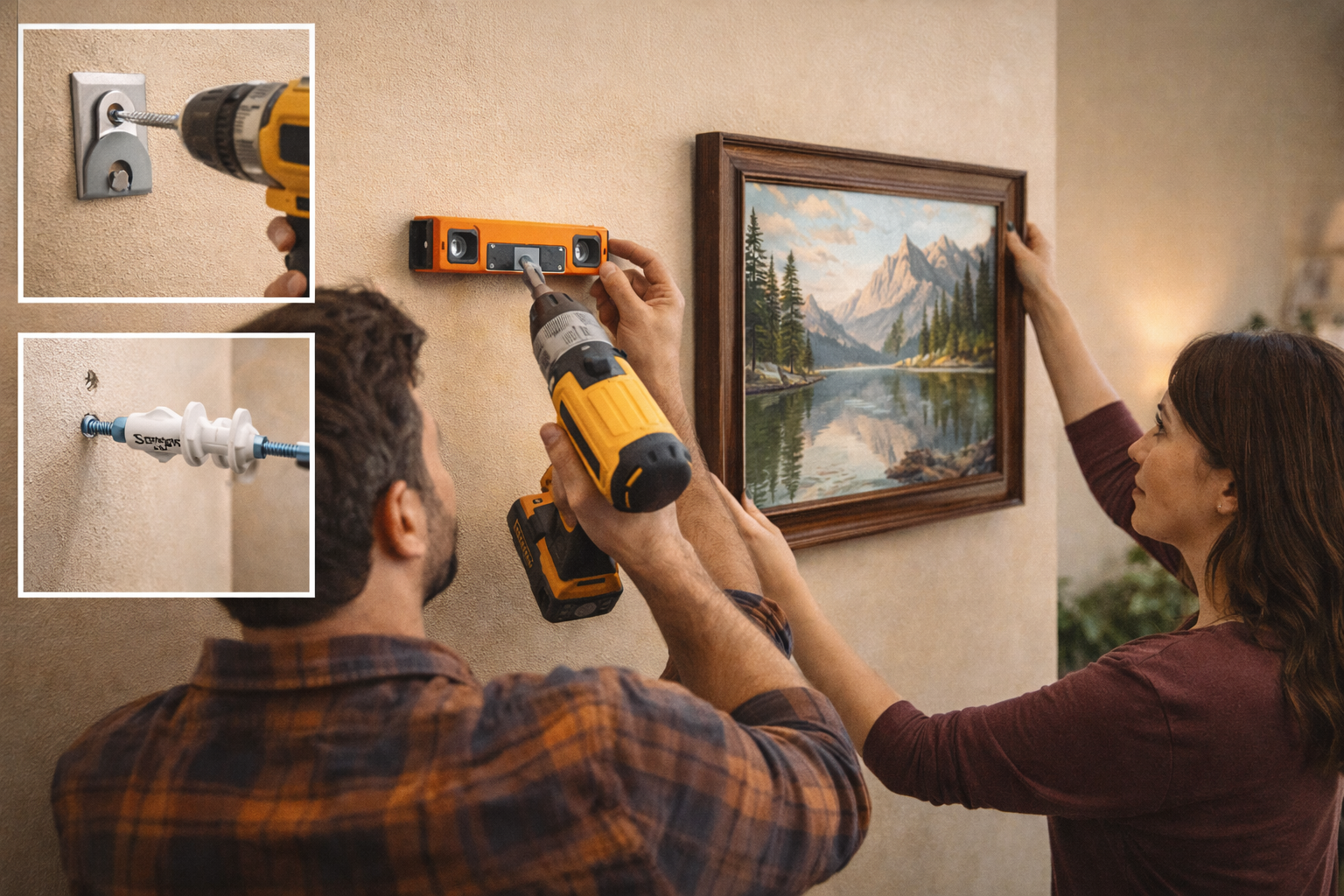
My first apartment had seventeen unnecessary holes in the walls when I moved out. I lost most of my deposit. I was guessing at everything — hammering nails wherever seemed right, hoping for the best. Those days are over.
Here’s the actual decision tree.
Step One: Find the Stud (or Don’t)
A stud finder costs $15 and saves you from a lot of regret. For anything heavy, you want to hit a stud. Slide the finder along the wall until it beeps, mark it with a pencil, verify by tapping (solid sound vs. hollow sound). When in doubt, go two inches left or right and check again — stud finders lie sometimes.
Step Two: Know What You’re Hanging
Under 5 lbs: a finishing nail at an angle. Done. 5 to 20 lbs with no stud available: plastic expansion anchor. Drill a pilot hole, tap the anchor in, drive the screw. Solid. 20 to 50 lbs: toggle bolt or snap toggle. These grip the back of the drywall and are surprisingly strong. Over 50 lbs: into a stud, full stop. No anchor handles a TV above the fireplace.
Plaster Walls
Older homes have plaster over lath. Stud finders often struggle with it. Drill slow, use a sharp bit, and don’t force anything. Plaster cracks when it’s angry.
Brick and Concrete
Masonry bit, hammer drill if you have one, and a plastic masonry anchor. Take your time.
Measure twice, drill once. Your walls will thank you.

Written by
Chris Bysocki
Dad of two (a 6-year-old daughter and a 3-year-old son), homeowner, and guy who learns most things the hard way. Writing about parenting, tools, yard work, and gear from a neighborhood in the real world.
More in this category
Ask Chris
Got a question about this topic — or anything dad-related? Send it over. I read every one.