
Building a Raised Garden Bed From Scratch
Raised beds produce more, drain better, and save your back. Here's how to build one that'll last a decade.
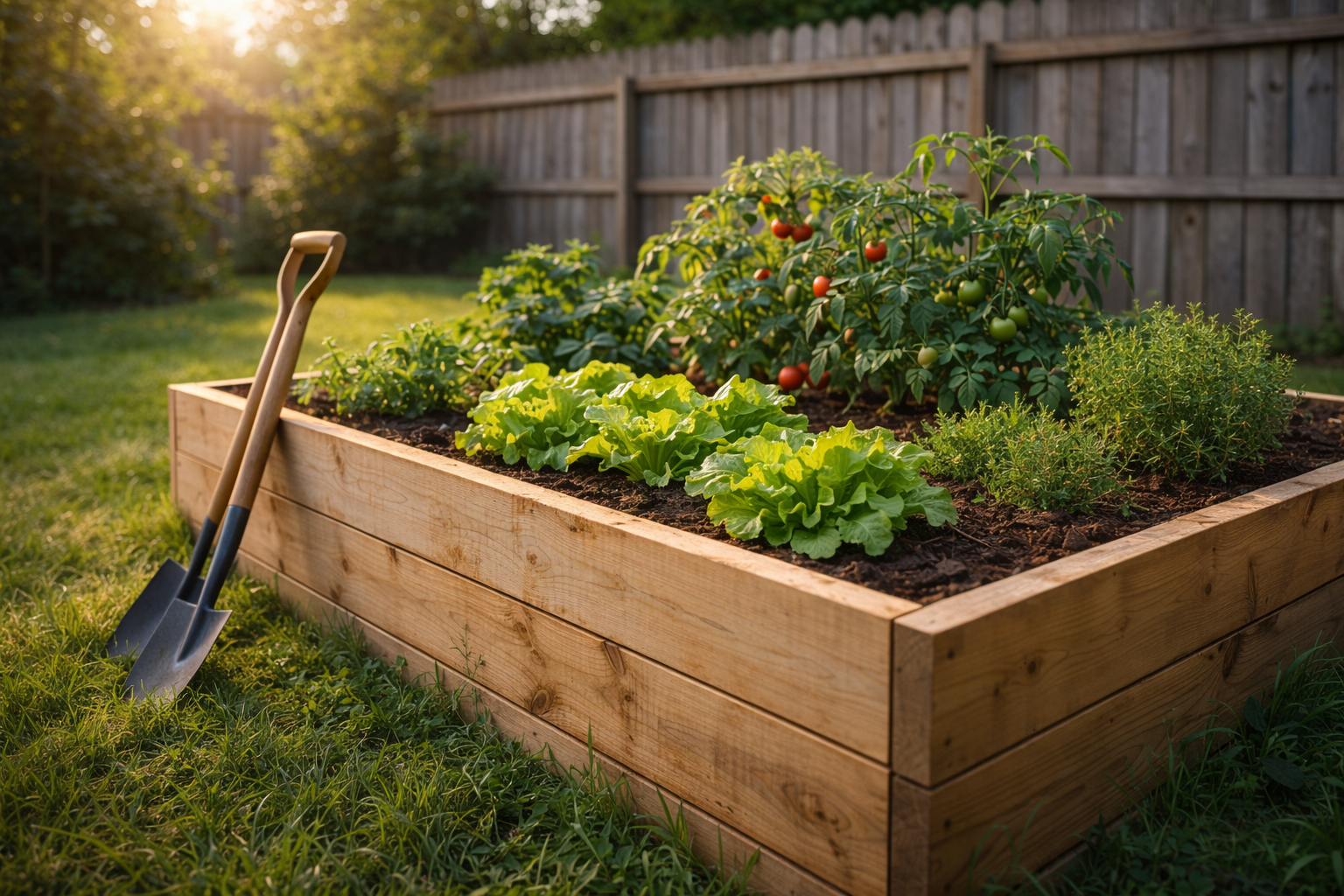
I grew up thinking gardening was for people with more patience than me. Then I built a raised bed, filled it with decent soil, planted six tomato plants, and produced more tomatoes than our family could eat. My entire worldview shifted over one summer.
Why Raised Over In-Ground
Drainage control, soil quality control, no tilling, fewer weeds, easier on your back, and you can start earlier in spring because the soil warms faster. The upfront work pays back every single season.
The Build
The simplest version: four 2x10 or 2x12 boards, eight feet by four feet. Four inches by four inches corner posts cut to the same height. Screws or bolts at the corners. Cedar or redwood if your budget allows, pine if not (pine will eventually rot, but it’ll give you several seasons). No pressure-treated lumber if you’re growing food.
Four feet wide is the magic dimension. You can reach the center from either side without stepping in.
The Soil
This is where people go wrong. Don’t fill a raised bed with topsoil alone. It compacts and drains poorly. The classic mix: one third compost, one third peat moss or coco coir, one third coarse vermiculite or perlite. It’s called Mel’s Mix, it works, and your plants will visibly thank you.
The Location
Six to eight hours of sun minimum. More if you’re growing tomatoes, peppers, or squash. Near a water source. You’ll be glad you planned for both.
One bed becomes two. Two becomes four. Fair warning.

Written by
Chris Bysocki
Dad of two (a 6-year-old daughter and a 3-year-old son), homeowner, and guy who learns most things the hard way. Writing about parenting, tools, yard work, and gear from a neighborhood in the real world.
More in this category
Ask Chris
Got a question about this topic — or anything dad-related? Send it over. I read every one.